
Machine Learning for Secure and Economic Power System Operations
Amidst the widespread integration of high-penetration renewable energy, power electronic devices, and flexible loads, the operation of new-type power systems exhibits increased uncertainty and faster dynamic characteristics. Ensuring secure operation requires not only meeting conditions such as N-1 reliability, frequency/voltage security, and stability margins but also achieving economic efficiency. Furthermore, the frequent occurrence of extreme events heightens operational complexity and risks, placing greater demands on rapid, robust, and implementable decision support for optimized operation. Machine learning can serve as a valuable complement to traditional security-constrained optimization and model-driven strategies. By integrating operational data and extracting key features, it enhances resource forecasting and uncertainty quantification while supporting rapid contingency screening and risk assessment. This special session focuses on cutting-edge methodologies, engineering practices, and open challenges in "Machine Learning for Secure and Economic Power System Operations." We welcome submissions of research results related to machine learning-enabled secure and economic operation of new-type power systems. Suggested topics include, but are not limited to:1. New theories, methods, and technologies for machine learning (ML)-enabled secure and economic power system operations
2. ML–based power system fault prediction and security defense
3. Enhancing grid resilience: ML for extreme-event response and recovery
4. Data-driven power market and dispatch optimization
5. Accurate load and renewable energy forecasting for new-type power systems
6. ML for security operations and low-carbon and economic operation under the dual-carbon targets
Chairs:
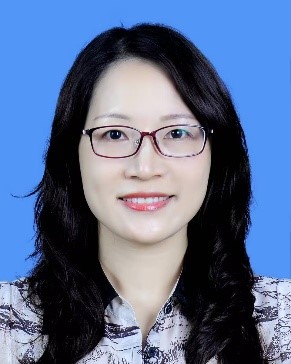
Prof. Lijun Liu, Fuzhou University, China
Prof. Lijun Liu received the Ph.D. degree in Engineering and is currently a Professor and Ph.D. Supervisor at Fuzhou University, China. She was a Visiting Scholar at the University of Michigan, USA. She is a Senior Member of the Chinese Society for Electrical Engineering (CSEE) and serves as a Council Member of the Fujian Society for Electrical Engineering. She also serves on the IEEE Power & Energy Society (IEEE PES) Renewable Energy Systems Integration (China) Technical Committee, and as a Council Member of the Subcommittee on Multi-source Complementary Operation and Renewable Energy Accommodation . Prof. Liu has led and participated in multiple research projects funded by the National Natural Science Foundation of China (NSFC), major projects at the provincial/ministerial level, the Science and Technology Program of the Fujian Provincial Department of Education, the Fuzhou University Science and Technology Development Fund, as well as industry–university collaborative projects. Her research interests include planning and operation of new-type power systems, microgrid operation and optimization, resilience-oriented grid planning under extreme weather, and demand-side management. She has published over 30 SCI/EI-indexed papers as the first or corresponding author and holds more than 10 granted invention patents.
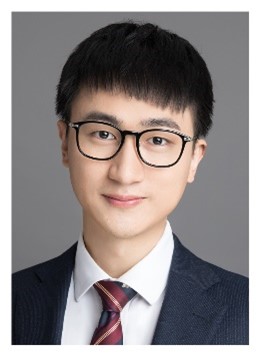
Assoc. Prof. Zhewen Niu, Taiyuan University of Technology, China
ZHEWEN NIU received his Ph.D. degree from South China University of Technology, Guangzhou, China in 2021. In 2019, he was a visiting scholar at the Department of Electrical and Computer Engineering, University of Alberta, Alberta, Canada, supported by the China Scholarship Council (CSC). He is currently an Associate Department Head of the Electrical Engineering Department, College of Electrical and Power Engineering, Taiyuan University of Technology. He is a standing committee member of the IEEE PCCC Conference Committee, a member of the IEEE PES Taiyuan Chapter, and a reviewer for international journals such as Applied Energy and IEEE Transactions on Sustainable Energy. His main research interests include renewable energy generation forecasting, power system operational safety and control, and the application of artificial intelligence in power systems. He has presided over six research projects, including those from the National Natural Science Foundation of China, the Shanxi Provincial Natural Science Foundation for Young Scholars, and the Open Fund of the Ministry of Education Key Laboratory. He has authored or co-authored over 20 SCI/EI papers as first or corresponding author, holds four authorized invention patents, and has published one monograph.
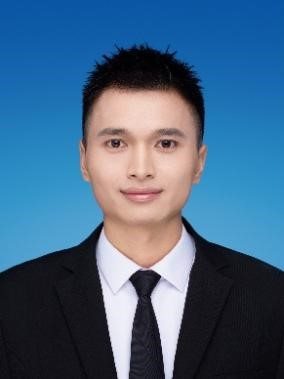
Dr. XiangLong Lian, Fuzhou University, China
XiangLong Lian,a lecturer and master's supervisor at Fuzhou University. He received his Ph.D. from South China University of Technology and was awarded the 2022 National Scholarship for Doctoral Students from South China University of Technology. His main research areas include power-transportation coupled networks, artificial intelligence algorithms, and their applications in improving grid resilience. He has led one National Natural Science Foundation of China (NSFC) Youth Project and participated as a core member in three NSFC General Program projects, National Key Laboratory Development Projects, and Guangdong Power Grid Corporation of China Science and Technology Projects. He has published/had accepted over 10 SCI and EI papers. He serves as a reviewer for domestic and international journals such as Sustainable Energy, Grids and Networks and Global Energy Interconnection.
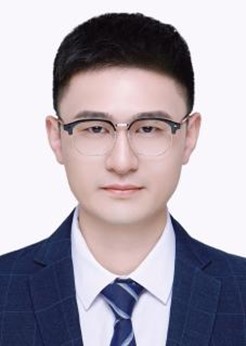
Assoc. Prof. Xiao-Yu Zhang, Anhui University, China
Xiao-Yu Zhang holds a Ph.D. degree from the University of London, UK, and is a visiting research fellow at Royal Holloway, University of London and University of Birmingham. The research mainly focuses on intelligent decision-making in smart grids. He has presided over two projects of the National Natural Science Foundation of China. As the first author or corresponding author, he has published more than 20 papers in SCI-indexed academic journals. He serves as a senior member of the China Electrotechnical Society, a member of the Energy Intelligence Special Committee, and an Associate Editor of Protection and Control of Modern Power Systems.

Assoc. Prof. Linwei Sang, Southeast University, China
Linwei Sang is an Associate Professor and Master’s Supervisor at the School of Electrical Engineering, Southeast University. His research focuses on AI-enabled power system operation and control. He received the B.Eng. and M.Eng. degrees from Southeast University and the Ph.D. degree from Tsinghua University. He was a visiting scholar at UC Berkeley under Prof. Shmuel S. Oren and a research intern at Alibaba DAMO Academy. He has published multiple IEEE Transactions papers, led an NSFC project, and received the IEEE PES Prize Paper Award.
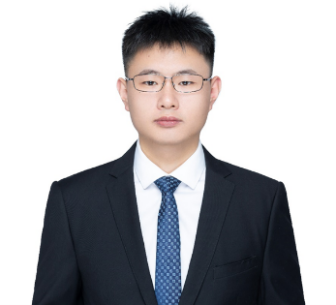
Dr. Jiang Yunpeng, Tsinghua University, China
User is a postdoctoral researcher at the Department of Electrical Engineering at Tsinghua University. They completed their PhD at Chongqing University, receiving an excellent doctoral dissertation award. Their research focuses on the optimization and operation of low-carbon power energy systems. In the past three years, they have published 7 papers as the first author, including 5 SCI Zone 1 papers. They serve as a reviewer for several leading journals in the field. They have hosted subprojects of the National Key R&D Program and multiple open fund projects for key laboratories. They are also a core member involved in over 10 major projects, including the National Key R&D Program, the Beijing Natural Science Foundation-Xiaomi Joint Fund, the National Natural Science Foundation of China, and technology projects from the State Grid Corporation of China.