
Advanced Grid-Forming Technologies for Power-Electronics Dominated Power Systems
The rapid transition toward power-electronics-dominated power systems presents new challenges for maintaining system stability and reliability. Grid-forming (GFM) technologies are recognized as promising solutions to enhance frequency and voltage support, yet their practical deployment remains limited. Existing studies often focus on control design under specific scenarios, while large-disturbance performance, transient dynamics, and system-level coordination are still underexplored. Moreover, the system benefit of GFM resources depends strongly on their spatial allocation and capacity ratio, as excessive or misallocated capacity may lead to poor economic efficiency and limited stability improvement.This Special Session aims to explore advanced grid-forming technologies that extend beyond traditional control design to multi-scenario applications, covering photovoltaics, wind power, and converter-interfaced DC systems and integrate the planning of GFM resources considering stability, dynamic performance, transient behavior, and cost. By bridging control innovation with system-level optimization, this session seeks to provide insights into how “advanced grid-forming” can be both technically robust and economically feasible in future weak power systems. Suggested topics include, but are not limited to:
• Advanced Grid-Forming Technologies for Inverter-based Resources: Robust multi-scenario GFM strategies adaptable to PV, wind, energy storage and HVDC systems.
• Stability and Resilience of Power-Electronics-Dominated Grids: Small-signal, dynamic, and transient stability challenges and enhancement methods.
• Modeling, Analysis, and Performance Assessment: Modeling frameworks, system strength/stability metrics, and validation approaches for converter-rich systems.
• System-Level Coordination and Integration of Grid-Forming Resources: Coordination among PV, wind, storage, and converter-interfaced DC links to support secure grid integration.
• Planning and Operation with Grid-Forming Resources: Siting/sizing, operational strategies, and cost-performance trade-offs for effective GFM deployment.
Chairs:

Dr. Haobo Zhang, Cardiff University, UK
Haobo Zhang received the B.Eng. and Ph.D. degrees in electrical engineering from the Huazhong University of Science and Technology (HUST), Wuhan, China, respectively. He was a Visiting Ph.D. Student with the Nanyang Technological University (NTU), Singapore, from 2023 to 2024. He is currently a Research Associate with Cardiff University, Cardiff, U.K. His research interests include MMC-HVDC, DC grids and Grid forming technology.
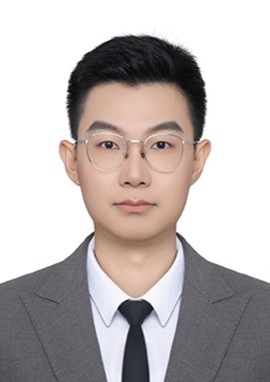
Dr. Wangkun Xu, Imperial College London, UK
Dr. Xu received PhD degree and Master degree in Control Systems from Imperial College London, UK in 2024 and 2019, respectively and BEng in EEE from University of Liverpool in 2018. His main research interests include physics-informed machine learning, such as implicit models and differentiable optimizations, with applications to power system operation and control. Since 2025, he is a research associate at Imperial under the “Electric Power Innovation for a Carbon-free Society Centre” (EPICS-UK) project to scale-up decision support for inverter-based power system with advanced optimization and AI techniques. Previously, he also interned as deep learning researcher at MediaTek UK in 2024. He is currently a member of IEEE and IET, and Associate Fellow of Higher Education Academy (AFHEA). He is the recipient of Departmental Full PhD scholarship at Imperial in 2020 and Distinguished Undergraduate student awards at University of Liverpool in 2017 and 2018.
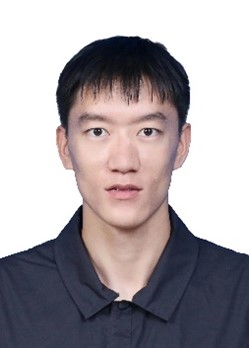
Dr. Wei Fan, Beihang University, China
Dr. Fan Wei is a postdoctoral fellow at the School of Economics and Management, Beihang University, China. His main research interests include energy economics and management, power system planning, and integrated energy system optimization. He has published papers in academic journals such as Applied Energy, Energy, and Renewable Energy. One of publications has been recognized as a top 1% highly cited paper in the ESI 2024 database.

Dr. Yao Zou, Chongqing Normal University, China
Zou Yao is a Lecturer at the College of Physics and Electronic Engineering, Chongqing Normal University. He received his Ph.D. degree in Electrical Engineering from Chongqing University in 2024. He received the B.E. and M.S. degrees in electrical engineering from the Hunan University. His research interests include reinforcement learning and optimization methods for power systems, as well as the applications of advanced communication technologies in supporting power system energy management.
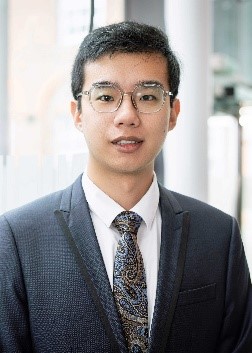
Dr. Zekun Guo, University of Hull, UK
He is a Lecturer in Artificial Intelligence for Engineering at the University of Hull, based in the Centre of Excellence for Data Science, Artificial Intelligence, and Modelling (DAIM). He obtained his PhD from Brunel University of London in 2023, and holds an MRes in Energy Systems from the University of Edinburgh and a BEng in Energy and Environmental Systems Engineering from Shandong University. He leads the MSc Artificial Intelligence for Engineering (Variant) programme and designed its core module, AI-Driven Optimisation and Control, which integrates advanced AI techniques into engineering practice to address real-world industrial challenges. His research focuses on autonomous AI agents, AI-driven optimisation, control and management for energy systems.