
Unlocking Potentials of Flexibility Resources: Resilience-oriented Advanced Control and Market Mechanism of Low-inertia Power Systems
The increasing penetration of renewable energy in modern power systems necessitates more resources to accommodate the vulnerability caused by low-probability extreme events. Currently, the identification, utilization, and coordination of the flexibility resources in the low-inertia power systems remain underexplored. This Special Session focuses on the advanced control schemes of renewable energy, fast-response devices, and energy storage, etc., to enhance the resilience and stability of low-inertia power systems, with a further aim to explore market designs that facilitate the active participation of flexibility resources. By bridging the gaps between technical modeling and market implementation, we seek to unlock the potentials of flexibility resources and build a unified roadmap that connects their physical capabilities and market value realization. Suggested topics include, but are not limited to:• Flexibility Resources Aggregation: Identification and aggregation of distributed energy resources to provide scalable flexibility services for system resilience.
• Synthetic Inertia control: Modeling, scheme design, and implementation of the synthetic inertia control for the inverter-based resources dominant systems.
• Rich Renewable Systems Interconnection: Energy coordination and mutual frequency support technologies among rich renewable interconnected systems.
• Advanced Market of Flexibility Resources: Market mechanisms incentivize and remunerate the active participation of diverse flexibility resources in ancillary services and demand response programs.
• Large-scale System Stability Simulation: High-fidelity simulation techniques for assessing the dynamic stability and resilience of large-scale, power-electronics-dominated systems.
Chairs:

Dr. Sufan Jiang, Nanyang Technological University, Singapore
Dr. Sufan Jiang received the B.S.E.E., M.S.E.E., and Ph.D. degrees from Southeast University, Nanjing, China. Currently, he is a research fellow at Nanyang Technological University (NTU), Singapore. Before joining NTU, he was a research scientist at the University of Tennessee, Knoxville (UTK), TN, USA, from 2022 to 2024. His research interests include cross-regional power transmission, resilient power system planning, energy policy in energy transition, and seaport electrification.
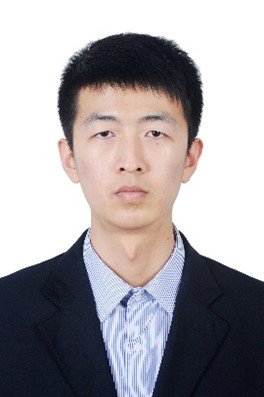
Assoc. Prof. Hui Li, Dalian University of Technology, China
Hui Li received his Ph.D. degree in electrical engineering from Chongqing University, China. He was a Visiting Ph.D. student with National University of Singapore, Singapore. He worked with Tsinghua University and the University of Macau after his graduation. He is currently an Associate Professor with Dalian University of Technology, China. His research interests include the modeling and optimization of low-inertia energy systems, and the applications of AI in energy systems.
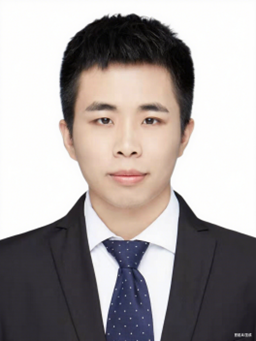
Assoc. Prof. Jialei Su, China University of Petroleum (East China), China
Jialei SU was born in Shandong, China, in 1995. He received the B.Eng. and M.Eng. degrees in electrical engineering from Shandong University, Jinan, China, in 2017 and 2020,respectively. He received the Ph.D. degree in electronic and electrical engineering from the University of Leeds, Leeds, U.K, in 2024. Now, he is an Associate Professor in China University of Petroleum (East China). His research interests include DC microgrids control, virtual inertial control, virtual synchronous generator and battery energy storage management.

Dr. Ying WANG, Southeast University, China
Ying Wang received the B.S. degree in Electrical Engineering and Automation from Nanjing University of Aeronautics and Astronautics, Nanjing, China, in 2011, and the M.S. and Ph.D. degrees in Control Theory and Control Engineering from Southeast University, Nanjing, China, in 2014 and 2018, respectively. She is currently an Associate Professor with the School of Automation, Southeast University, where she also serves as a Ph.D. and M.S. supervisor. She is a member of Prof. Kaifeng Zhang’s research group. From September 2015 to March 2017, she was a visiting Ph.D. student at Argonne National Laboratory, USA, under the CSC joint training program, and from March to April 2017, she was a visiting scholar at the Massachusetts Institute of Technology (MIT), USA. Her research interests include power system scheduling and control, electricity markets, integrated energy systems, and the application of artificial intelligence methods in these areas.

Dr. Xinyu Wang, Yanshan University, China
Dr. Xinyu Wang received the Ph.D. degrees from Yanshan University. Currently, he is an associate professor at Yanshan University. His research interests include the safety and optimization control of ship power integrated energy system.