
Advanced Modeling, Optimization, and Market Mechanisms for Generalized Energy Storage in Low-Carbon Power Systems
Generalized energy storage (GES), including battery storage, hydrogen systems, power-to-X pathways, thermal storage, and virtual storage resources, is becoming a cornerstone of future low-carbon and high-renewable power systems. Compared with conventional batteries, GES introduces heterogeneous dynamics, multi-energy couplings, multi-timescale behaviors, and a rich set of service capabilities spanning energy, capacity, reserves, and congestion management. These features create new challenges and opportunities for modeling, optimization, and market integration. This Special Section invites original research that advances analytical foundations, computational methods, and practical frameworks for GES. Topics of interest include multi-timescale dispatch, planning, reliability and resilience enhancement, cyber-physical interactions, and market designs that ensure transparent, efficient, and equitable participation of heterogeneous storage resources. Studies emphasizing explainable AI, uncertainty-aware decision-making, and digital-twins are also welcome. Suggested topics include, but are not limited to:1. Physical and market Behavior modeling for generalized energy storage
2. Multi-timescale scheduling for generalized energy storage
3. Long-term planning for generalized energy storage
4. Control design and stability analysis for generalized energy storage
5. Centralized and local market design for generalized energy storage
6. Cyber-physical-social interactions in storage-rich grids
7. Digital-twin technologies for generalized energy storage
Chairs:
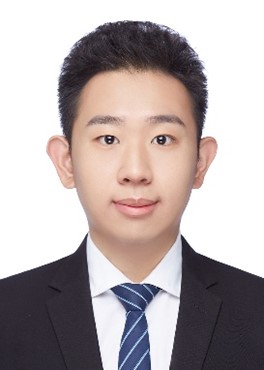
Dr. Ning Qi, Columbia University, USA
Dr. Ning Qi received a B.S. degree in Electrical Engineering from Tianjin University, Tianjin, China, in 2018 and the Ph.D. degree in Electrical Engineering from Tsinghua University, Beijing, China, in 2023. He is currently a postdoctoral research scientist in Earth and Environmental Engineering at Columbia University. Before joining Columbia University, he was a visiting scholar at the Technical University of Denmark in 2022. He was a research associate in Electrical Engineering at Tsinghua University in 2024. He received the Best Paper Award for IEEE PES General Meeting 2024 and the 2024 Outstanding Reviewer Award for IEEE Transactions on Smart Grid}. He is currently serving as the Associate Editor of IEEE Data Descriptions, Youth Editorial Board Member for Power System Protection and Control, Protection and Control of Modern Power Systems, and Energy Conversion and Economics. His current research focuses on behavior modeling, optimization under uncertainty, and market design for power systems with generalized energy storage.
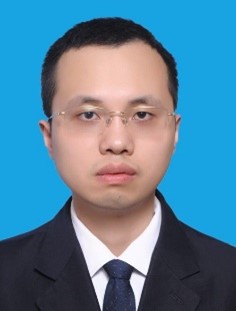
Dr. Jie Chen, Xiangtan University, China
Jie Chen is a Lecturer at the School of Automation and Electronic Information, Xiangtan University. He obtained his Ph.D. in Electrical Engineering from Hunan University. His research interests include the design and optimization of integrated energy systems, as well as the scheduling of electric vehicle load by leveraging optimization, machine learning, and reinforcement learning technologies. He has published over 10 papers as first author or corresponding author in IEEE Transactions on Transportation Electrification, Energy, Applied Energy, Engineering Applications of Artificial Intelligence,International Journal of Electrical Power & Energy Systems,and other journals.
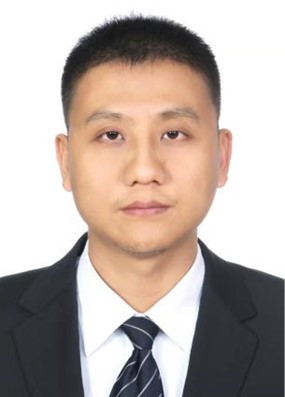
Prof. Kai Wang, Qingdao University, China
Kai Wang is a Professor at Qingdao University and Vice President of its Weihai Innovation Research Institute. With an h-index of 63, he has published over 90 high-impact SCI papers, cited 10137 times on Google Scholar. A consecutive four-year honoree of the World's Top 2% Scientists (2021-2024) and ELSEVIER 2024 Most Cited Chinese Researcher and Taishan Industry Leading Talent, he holds 8 authorized national invention patents with over 10 million yuan in technology transfer. He leads numerous national/provincial projects, specializing in new energy storage, smart power systems, and energy internet. His achievements have earned him provincial science and technology awards, making him a key figure in related academic and industrial fields.
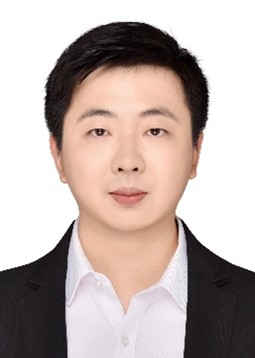
Assoc. Prof. Jia Liu, Hangzhou Dianzi University, China
Jia Liu received the B.S. and Ph.D. degrees in electrical engineering from Tianjin University, Tianjin, China, and Shanghai Jiao Tong University, Shanghai, China, in 2014 and 2019, respectively. He was a post-doctoral in Zhejiang University, Hangzhou, China, and a visiting scholar in Cardiff University, Cardiff, U.K. He is currently an associate professor in Hangzhou Dianzi University, Hangzhou, China. His main research interests are planning, assessment and operation of power and energy systems, distributed optimization in transmission and distribution networks.
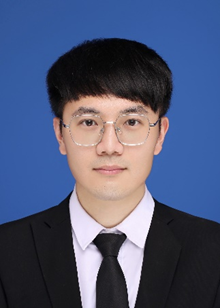
Assoc. Prof. Shiwei Xie, Fuzhou Universityy, China
Shiwei Xie is currently an Associate Professor and M.Sc. Supervisor at the School of Electrical Engineering and Automation, Fuzhou University. He received his Ph.D. from Wuhan University and served as a Researcher at Nanyang Technological University (NTU), Singapore. His research interests focus on the coordinated optimization of integrated energy systems, power–transportation coupled networks, and electricity market design.
Dr. Xie has been selected for the CSEE Youth Talent Support Program and recognized as a High-level Talent of Fujian Province. He received the Outstanding Doctoral Dissertation Award from the China Electrotechnical Society. As a Principal Investigator, he leads projects funded by the National Natural Science Foundation of China (NSFC) and State Grid. He is the first author of the monograph Optimal Operation and Resilience Enhancement of Integrated Power and Transport Systems (Elsevier) and has published over 50 peer-reviewed papers in top-tier journals, including IEEE Transactions on Power Systems. He serves as a Youth Editorial Board Member for Protection and Control of Modern Power Systems.