
Boosting the Economics and Resilience of Modern Power Systems: A Multi-Regional Operational Coordination Perspective
A defining feature of modern power systems is growing interconnectivity, rising renewable penetration, and an uneven distribution of resources across regions. Yet these developments are not fully understood or leveraged in practice, limiting the economic efficiency and resilience of modern power systems.This session focuses on multi-regional operational coordination in interconnected, large-scale power systems, including but not limited to power exchange, congestion management, and reserve sharing. It places particular emphasis on renewable integration, including but not limited to offshore wind, as well as multi-terminal HVDC systems spanning multiple regions. The session also welcomes work across a range of regional contexts, including but not limited to the EU, the USA, and China.
By bringing together state-of-the-art, practice-oriented studies, the session aims to strengthen multi-regional coordination and, in doing so, improve both the economics and resilience of modern power systems.
Chairs:
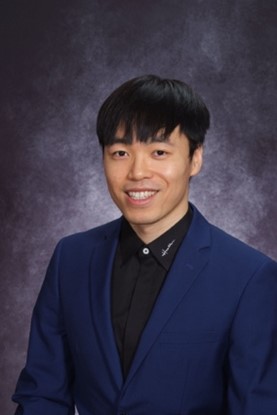
Dr. Xianbang Chen, Cornell University, USA
Xianbang Chen is an Ezra Postdoctoral Associate at Cornell University. He received his B.S. and M.S. degrees in Electrical Engineering from Sichuan University (China) in 2017 and 2020, respectively. In 2024, he earned his Ph.D. in Electrical Engineering from Stevens Institute of Technology (USA). His research focuses on improving the economic performance of modern power systems by integrating optimization and machine learning (e.g., decision-focused learning).
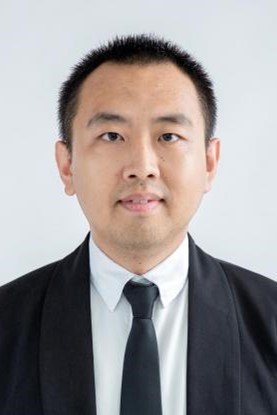
Assoc. Prof. Wenyang Deng, Guangdong University of Science and Technology, China
Wenyang Deng is an associate professor at Guangdong University of Science and Technology. He received his M.S. degrees in Electrical Power System Engineering from University of Manchester in 2015. In 2021, he earned his Ph.D. in Electric and Computer Engineering from University of Macau. His research focuses on AI-supported power flow optimization and power electronics design.
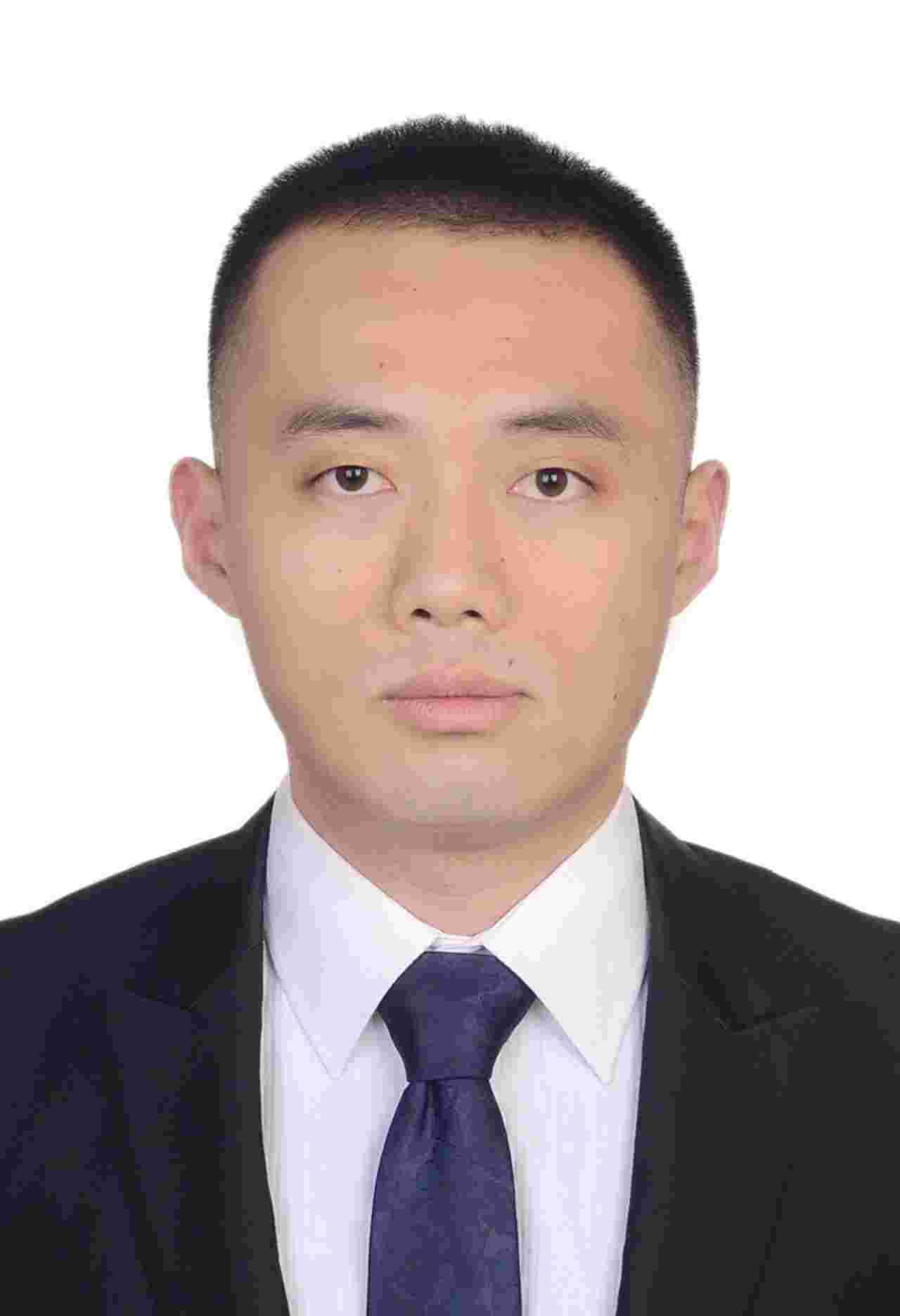
Assoc. Prof. Ping Lin, Dalian University of Technology, China
Ping Lin (Member, IEEE) received the Ph.D. degree in navigation guidance and control from the School of Control Science and Engineering, Dalian University of Technology, Dalian, China, in 2021. From 2022 to 2024, he was working as a Postdoctoral Researcher with the Dalian University of Technology. He is currently an Associate Professor with the School of Control Science and Engineering, Dalian University of Technology, Dalian, China, since 2024. His research interests include nonlinear systems, active disturbance rejection control, and generator control systems.
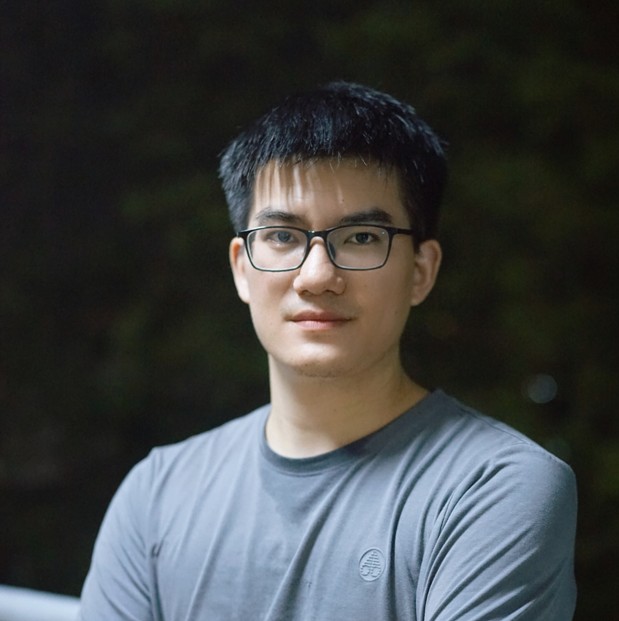
Assoc. Prof. Weitao Yao, Xi'an Jiaotong-Liverpool University, China
Weitao Yao received a B.Eng. degree in Electrical Engineering and Automation from South China University of Technology, Guangzhou, China, in 2015, and an M.Sc. degree and Ph.D. degree in Power Engineering from Nanyang Technological University, Singapore, in 2018 and 2023, respectively. He is currently an Assistant Professor in the Department of Electrical and Electronic Engineering, School of Advanced Technology, at Xi'an Jiaotong-Liverpool University. His research interests include microgrids, stability analysis, distributed control, and cyber-physical systems.
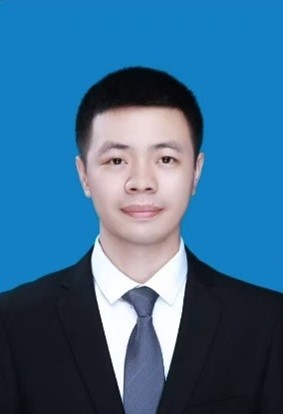
Dr. Junjie Zhong, Changsha University of Science & Technology, China
Dr. Junjie Zhong received a doctoral degree from Hunan University, China, and is currently a lecturer at the School of Electrical and Information Engineering, Changsha, China. He has published more than 10 papers as the first/correspondence author. His research has been funded by the National Nature Science Foundation of China, etc. He served as the Guest Editors of Energies, Electronics Journal. His research interests include the optimization under uncertainty and distributed optimization of integrated energy systems and power systems.
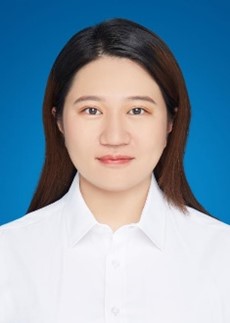
Dr. Jingjie Huang, Changsha University of Science & Technology, China
Jingjie Huang(IEEE Member, CEEE Member) received the Ph.D. degree in Electrical Engineering from the University of New South Wales in 2020. She is currently a Lecturer and Master's Supervisor at the School of Electrical and Information Engineering at Changsha University of Science & Technology. Dr. Huang has published over 20 academic papers in prominent domestic and international journals, has been granted 12 Chinese/overseas invention patents, has authored one monograph, and has co-authored one textbook. She is the principal investigator for one project funded by the National Natural Science Foundation of China and three provincial/ministerial-level projects. Her primary research interests include power system operational optimization, integrated energy systems, integration of transportation and energy networks, and active distribution networks.
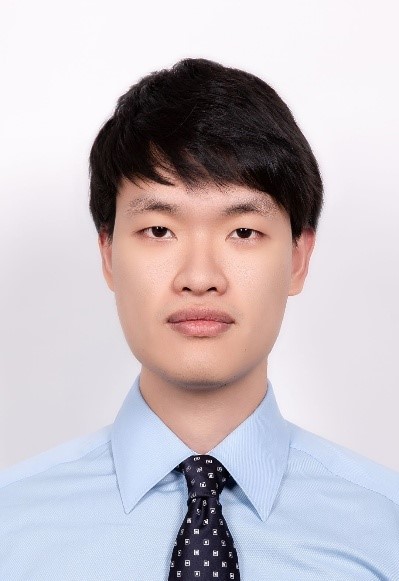
Dr. Yuechuan Tao, City University of Hong Kong, China
Yuechuan Tao received a Ph.D. degree in the University of Sydney, Australia in 2023. From 2023-2024, he was the Wallenberg-NTU Presidential Postdoctoral Fellow in Nanyang Technological University. Currently, he is a Global Research Assistant Professor in City University of Hong Kong. He was selected as Stanford's top 2% most highly cited scientists 2024. His research interests lie in data-driven low-carbon energy transitions, with a focus on power system planning, electricity market modeling, transportation electrification and AI-driven solutions for smart grid operations, renewable energy integration, and optimal energy management.

Assist. Prof. Shuying Lai, City University of Macau, China
Shuying Lai (Member, IEEE) received the B.Sc. degree in Finance, Accounting and Management from the University of Nottingham, Ningbo, China, in 2017, the M.Com. degree in Finance, Accounting from the University of Sydney, Australia, in 2019, and the Ph.D. degree in Electrical Engineering from the University of Sydney, Australia, in 2022. She is currently an assistant professor at the faculty of Data Science, City University of Macau, Macau. Her main fields of interest include data-driven energy market analysis, demand response, and low/zero-carbon energy management.
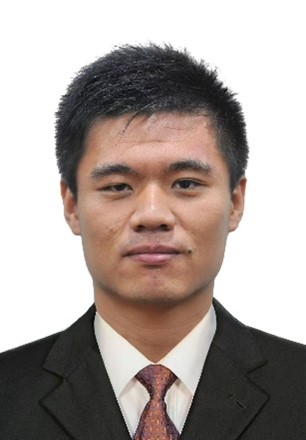
Mr. Xiang Luo, Electric Power Research Institute, State Grid Fujian Electric Power Co., Ltd., China
Xiang Luo is a specialist in distribution automation technology at the Power Distribution Research Institute of the State Grid Fujian Electric Power Research Institute. He is a senior member of the Chinese Society for Electrical Engineering and the Chinese Electrotechnical Society, a member of the National Standardization Committee for Low-Voltage Complete Switchgear and Control Equipment, a member of the Distribution Network Working Group of the National Technical Committee for Standardization of Power System Management and Information Exchange, a director of the IEEE PES Subcommittee on Distribution Network Protection and Control Technology and Distribution Technology, and a part-time external faculty member at Fuzhou University. He has been engaged in the operation and maintenance of distribution switchgear, practical application improvement of distribution automation and other related work for a long time. He mainly conducts technical research in the fields of smart distribution network technology, intelligent power equipment and fault diagnosis technology. He has led the compilation of several institutional norms and guiding documents such as the practical application of primary and secondary integrated equipment in Fujian Province and the improvement of distribution network single-phase grounding fault handling capabilities. He has extensive experience in equipment testing and on-site practice.
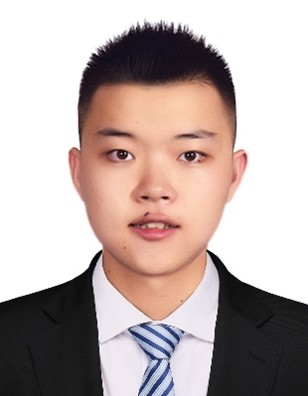
Mr. Yi Yang, Electric Power Research Institute, State Grid Fujian Electric Power Co., Ltd., China
Yi Yang, (member, IEEE) earned his Ph.D. from the University of Sydney, Australia in 2025. He is currently an intermediate engineer at the Power Distribution Research Institute, Electric Power Research Institute, State Grid Fujian Electric Power Co., Ltd. His main research interests include low-carbon system transition, vehicle-grid interconnection, and coordinated operation optimization of micro-distribution networks.