
Innovations and Synergies in Low-Carbon Energy-Economy-Transport Integrated Systems
Against the backdrop of global carbon neutrality goals, the integration of energy, economy, and transport sectors has become an inevitable trend in sustainable development. The widespread adoption of renewable energy, the rapid electrification of transport, and the deepening of market-oriented reforms have accelerated the formation of interconnected and complex cross-domain systems. However, challenges such as intermittent renewable energy output, uncoordinated multi-sector operation, complex market mechanism design, and potential cyber-physical security risks hinder the efficient and low-carbon operation of these systems. To address these issues, this Special Session aims to gather cutting-edge research achievements in intelligent optimization technologies, cross-domain synergy mechanisms, and low-carbon development strategies. It provides a platform for academic exchanges and cooperation to promote the reliable, efficient, and sustainable development of integrated systems. Suggested topics include, but are not limited to:1. Intelligent optimization algorithms for multi-energy systems with high renewable energy penetration.
2. Cross-domain synergy mechanisms between energy, economy, and transport sectors.
3. Market design and transaction modes for low-carbon integrated systems.
4. AI and big data-driven demand response and resource scheduling.
5. Cyber-physical security and resilience enhancement of integrated energy-transport systems.
6. Low-carbon transition paths and policy support for multi-sector integration.
Chairs:
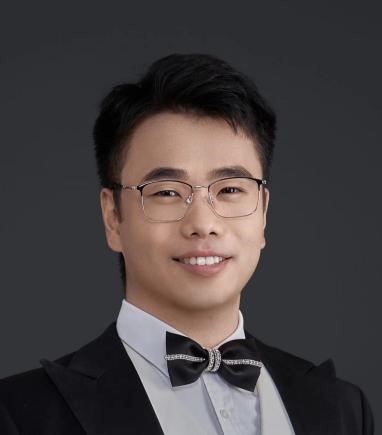
Dr. Yitong Shang, Yitong Shang, Hong Kong University of Science and Technology, Hong Kong, China
Yitong Shang received the B.Eng. degree in electrical engineering and its automation from China Agricultural University, Beijing, China, in 2017, and the Ph.D. degree in information and communication engineering via a collaborative program involving Harbin Institute of Technology, Harbin, China, and Southern University of Science and Technology, Shenzhen, China, in 2022. He is currently a Research Assistant Professor with the Department of Civil and Environmental Engineering, The Hong Kong University of Science and Technology, Hong Kong, and he previously served as a Postdoctoral Researcher there. He was a Visiting Scholar with the Technical University of Munich, Munich, Germany. His research interests include nexus of energy, transportation, and market by EV&V2G technology.
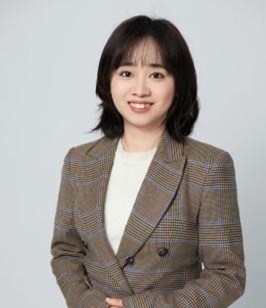
Assoc. Prof. Zao Tang, Hangzhou Dianzi University, China
Dr. Tang received the B.S. and Ph.D. degrees from the College of Electrical Engineering, Sichuan University, Chengdu, China, in 2016 and 2021, respectively. She was a Visiting Scholar with the Stevens Institute of Technology, Hoboken, NJ, USA, during 2019–2020. She is currently an associate professor with the Department of Automation, Hangzhou Dianzi University, Hangzhou, China. Her research interests include on power system planning and operation, renewable energy integration, electricity market design, and AI/optimization methods for energy systems.
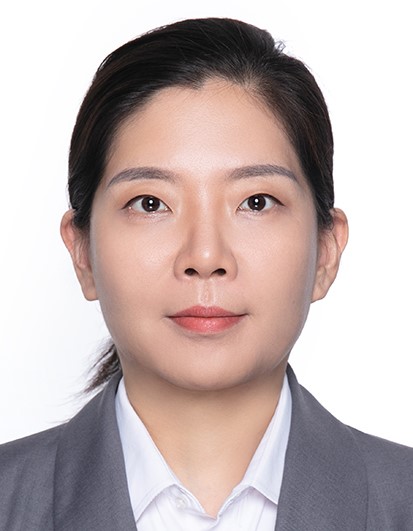
Prof. Hui Hou, Wuhan University of Technology, China
Dr. Hui Hou received the B.S. degree from Wuhan University, Wuhan, in 2003, and the Ph.D. degree from the Huazhong University of Science and Technology, Wuhan, in 2009. During 2015-2016, she was a visiting scholar at the University of Sydney. During Aug. 2025 she was a senior visiting scholar in Aalto University, Finland. She is currently professor and Ph.D supervisor, as well as the Department Head of Electrical Engineering,School of Automation, Wuhan University of Technology. Her research interests include risk assessment of power system, energy internet, electric vehicles, etc. She has been Editorial Board Member for a number of journals such as PCMP (Protection and Control of Modern Power Systems), etc. She has been nominated as World's Top 2% Scientists by Stanford and Elsevier in 2024 and 2025.
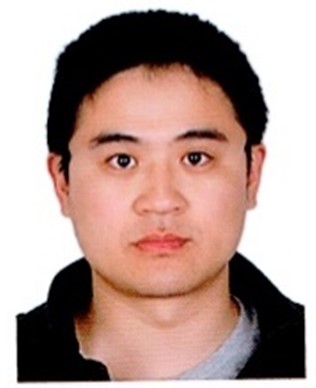
Assoc. Prof. Xueqian Fu, China Agricultural University, China
Xueqian Fu (Senior Member, IEEE) is the Vice President of the IEEE Smart Village-China Committee, and an active member of IEEE Young Professionals. He is currently an Associate Professor at China Agricultural University. He has been recognized as one of the Stanford/Elsevier Top 2% Scientists (Career-long Impact) in the field of energy for both the 2024 and 2025 rankings. Prof. Fu received his B.S. and M.S. degrees from North China Electric Power University in 2008 and 2011, respectively, and his Ph.D. degree from South China University of Technology in 2015. From 2015 to 2017, he was a Postdoctoral Researcher at Tsinghua University. His current research interests include statistical machine learning, agricultural energy internet, and PV system integration. He serves as the Deputy Editor-in-Chief for Information Processing in Agriculture and is also the founding chair of the 2025 IEEE International Symposium on the Application of Artificial Intelligence in Electrical Engineering.
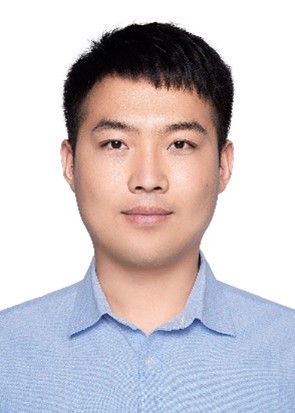
Dr. Chuanliang Xiao, Shandong University of Technology, China
Chuanliang Xiao received the B.Eng. and Ph.D degrees from the School of Electrical Engineering and Automation, Hefei University of Technology, Hefei, China, in 2015 and 2020, respectively, both in electrical engineering. His research interests include renewable energy and distributed generation.