
Empowering a Green Future: Symposium on Key Technologies for Optimal Operation and Control of Integrated Energy Systems
Under the global trend of combating climate change and accelerating energy transition, achieving the "dual carbon" goals has become a core issue. The Integrated Energy System (IES) breaks the barriers of various energy sources such as electricity, heat, cold and gas, achieving multi-energy complementarity, cascade utilization and coordinated optimization, which is the key path to improving energy utilization efficiency, large-scale absorption of renewable energy and ultimately achieving carbon neutrality. However, the efficient, safe and economic operation of IES faces severe technical challenges such as the dual uncertainty of renewable energy output and load demand, complex coupling of multi-energy flows, and collaborative control of massive equipment. Optimization control technology, as the "smart brain" of IES, is the core to unlock its huge potential. This special session aims to bring together top scholars, industry experts and policy makers from home and abroad to deeply discuss the cutting-edge key technologies, innovative applications and practical challenges in the field of IES operation optimization and control, and jointly discuss solutions to empower a green future. Suggested topics include, but are not limited to:1. New development in theory, method and technology of integrated energy systems (IESs)
2. Multi-energy coupling system and intelligent scheduling modeling of IESs
3. Advanced simulation models of low-carbon IESs
4. Security risk and vulnerability assessment of IESs
5. Cyber security assessment and defense of IESs
6. Transient stability control of IESs
Chairs:
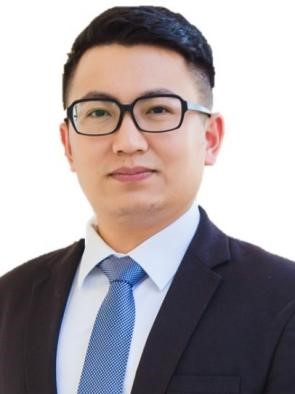
Assoc. Prof. Yang Liu, South China University of Technology, China
Yang Liu:associate professor, PhD supervisor, holds a Ph.D. from South China University of Technology and was a visiting scholar at the University of Liverpool in the UK. He has long been engaged in research on the solution of the transient stability domain of attraction of power systems and transient stability control methods. He proposed the structure-preserving dimensionality-reduction mapping theory for the attraction domain of high-dimensional systems, significantly improving the computational efficiency of the attraction domain boundary of large-scale systems. He put forward the distributed maximum transient energy control method and the stability proof method for general hybrid switching control systems, and pioneered the switching Lyapunov function stability theory for converters. He also proposed the maximum transient energy control method for power systems, solving the problem of rapid stability control of power systems under emergency fault conditions.
He was selected for the "Young Talent Support Project" of the Chinese Society for Electrical Engineering and was named one of the "100 Innovative Doctors and Post-doctors in Guangdong Province". He presided over the National Natural Science Foundation Fund, the Special Fund of the China Postdoctoral Science Foundation, the first-class funding of the General Project of the China Postdoctoral Science Foundation, the Guangdong Offshore Wind Power Joint Fund, the Basic and Applied Basic Research Project of Guangzhou, and the Fundamental Research Funds for the Central Universities. As the first author, he published a monograph by Springer and more than 40 SCI-indexed papers.
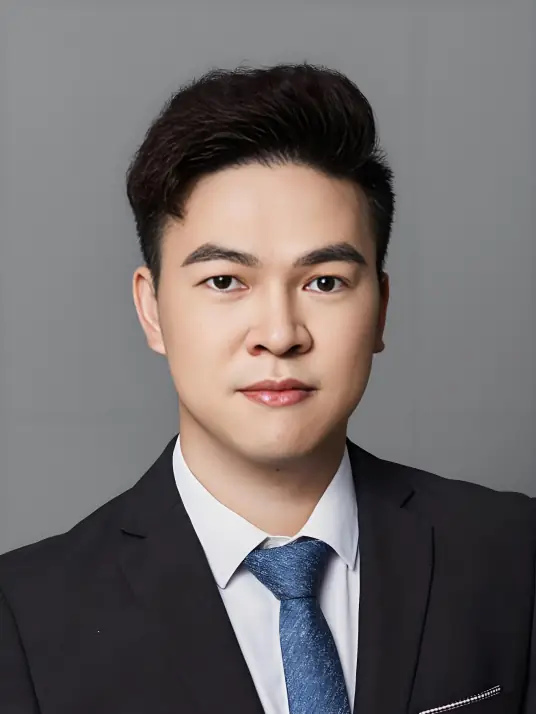
Assoc. Prof. Jiehui Zheng, South China University of Technology, China
Dr. Jiehui Zheng obtained his B.E. degree in electrical engineering and its automation of Huazhong University of Science and Technology (HUST) in 2012, and his Ph.D. degree in power system and its automation of South China University of Technology (SCUT) in 2017. Dr. Zheng has been selected in “Lifting Project for Young Talents of CSEE” in 2021. He has participated in more than ten projects as a main researcher. He has published more than 100 SCI/EI indexed papers, including 40 SCI papers as the first author/corresponding author, 2 ESI highly cited paper, 1 English monograph published by Springer Nature, and 6 Chinese patents. Dr. Zheng is an Associate Professor in SCUT, focusing on the research areas of equivalent modeling, planning and operation of integrated energy systems.
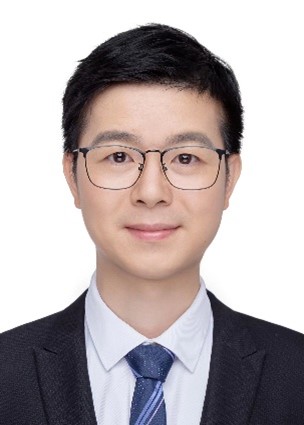
Assoc. Prof. Kaishun Xiahou, South China University of Technology, China
Kaishun Xiahou is now an Associate Professor at School of Electric Power Engineering, South China University of Technology. His research interests include cyber-physical security and resilient control of power systems with renewable energy. Dr. Xiahou is the principal investigator of young elite scientist sponsorship program by Chinese Society for Electrical Engineering (CSEE), National Natural Science Foundation of China, and Guangdong Basic and Applied Basic Research Foundation. He has published more than 30 SCI papers and he is the young editor of Protection and Control of Modern Power Systems, and Electric Power Information and Communication Technology.
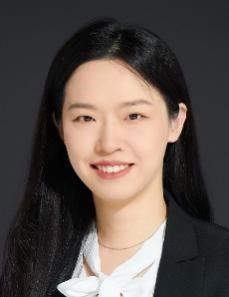
Dr. Tong Zhang, University of Leeds, UK
Dr. Tong Zhang is a Lecturer at the Institute of Communication and Power Networks, University of Leeds, UK. She received her Ph.D. in Power System and Automation from South China University of Technology in 2021 and previously worked as a Postdoctoral Researcher at the Centre for Integrated Renewable Energy, Cardiff University. Her primary research focuses on the modeling and optimization of integrated energy systems, particularly electricity-heat-hydrogen multi-energy coupling systems and renewable energy integration technologies. She has served as a key member of several major UK energy initiatives, including projects funded by the UK Engineering and Physical Sciences Research Council (EPSRC) on hydrogen integration, multi-energy system flexibility, and tidal energy storage, as well as collaborative projects with UK power grid companies on ground-source heat pump flexibility research.

Assoc. Prof. Tong Qian, South China University of Technology, China
Tong Qian is currently an Associate Professor at the School of Electric Power Engineering, South China University of Technology. His primary research focuses on the planning and operation of integrated water–energy–computing–carbon (WECC) systems, with particular emphasis on their intersections with digital twin technologies and climate and meteorological sciences. Dr. Qian has authored or co-authored more than 80 academic papers and contributed to one monograph. He has received several academic honors, including two Second Prizes and one Third Prize at the Annual Meeting of the Energy Internet Committee of the Chinese Society for Electrical Engineering, as well as a First Prize and a Third Prize of the Guangdong Electric Power Science and Technology Award. He was awarded the Outstanding Paper Award by Engineering Sciences (2020–2021), a journal of the Chinese Academy of Engineering. He has also been recognized as an Outstanding Reviewer for Global Energy Interconnection in both 2022 and 2023. His research achievements have further earned the Second Prize for Scientific and Technological Progress from Guangdong Power Grid Co., Ltd., and the Third Prize for Scientific and Technological Progress from China Southern Power Grid Company Limited.