
Advances in Demand Response and Energy Market Mechanisms for Future Integrated Energy Systems
To achieve zero-carbon emission goals, future integrated energy systems are being shaped by increasing penetrations of renewable energy sources, the rapid electrification of the residential, commercial, and industrial sectors, and the growing integration of green hydrogen, ammonia, etc. However, uncertainties associated with renewable generation, the rising energy demand from electrified sectors, and the complexity of multi-energy trading pose significant challenges for the reliable and economical operation of integrated energy systems. To address these challenges, innovative and effective demand response and energy market mechanisms need to be designed to support energy balancing, enhance energy flexibility, and reduce operational costs. This Special Session is dedicated to exploring the latest advances in DR technologies and energy market mechanisms that enable the reliable, efficient, and low-carbon operation of future integrated energy systems. Suggested topics include, but are not limited to:1. Modelling and coordinated operation strategies for integrated energy systems.
2. Energy market mechanisms for integrated energy systems.
3. Demand response strategies for residential, commercial, and industrial sectors.
4. AI and Machine Learning for DR and multi-energy market mechanisms.
5. Reliability, resilience, and security enhancement via DR and energy market mechanisms.
Chairs:
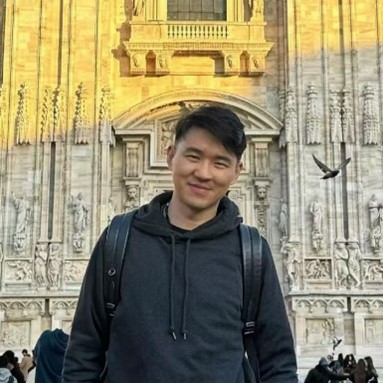
Assist. Prof. Zhengmao Li, Aalto University, Finland
Zhengmao Li (Member, IEEE) received the Ph.D. degree from the School of Electrical and Electronic Engineering, Nanyang Technological University, Singapore, in 2020. He was a Research Fellow with Stevens Institute of Technology, USA, from 2019 to 2021, and Nanyang Technological University and Singapore ETH Center from 2021 to 2023. In 2023, he joined Aalto University as an Assistant Professor. His research interests include renewable energy integration, microgrids, and multienergy systems.
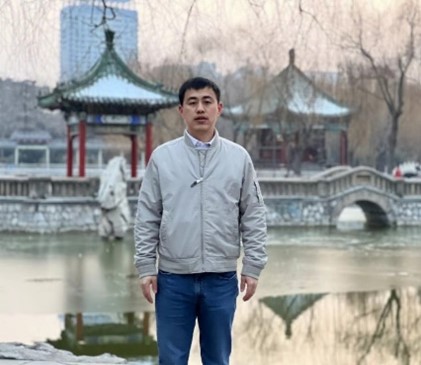
Assoc. Prof. Liwei Ju, North China Electric University (Beijing), China
Ju Liwei joined the School of Economics and Management of North China Electric Power University (NCEPU) in January 2019, and was promoted to Associate Professor in December 2020. From 2020 to 2023, he was selected into the “Aier & Only AI China High-level Talent Program”. He serves as a young editorial board member of Electric Power Construction, a core member of the Beijing Key Laboratory of New Power System with Low Carbon, a council member of the China Society of Optimization, Overall Planning and Economic Mathematics (Energy Systems Engineering Branch), and a member of the Carbon Neutrality Management Expert Committee of the Beijing Energy Development Research Base. He has also served as a reviewer for the National Natural Science Foundation of China (since 2019) and for the Beijing Social Science Foundation (since 2022).

Assoc. Prof. Liang Feng, Shandong University of Technology, China
Liang Feng, received the Ph.D. in Electrical Engineering from Tianjin University in 2013 and currently serve as an Associate Professor and Master’s Supervisor at SDUT. His research focuses on power system planning and operation, renewable energy integration, electricity market design, and AI/optimization methods for energy systems.

Assoc. Prof. Xiaodong Zheng, South China University of Technology, China
Dr. Zheng’s research lies at the intersection of electrical engineering, operations research, and computer science. His primary interests include optimization under uncertainty, quantum computing, and intelligent decision-making for renewable power systems. He aims to develop new theoretical frameworks and algorithms to address challenges in renewable energy integration, optimal management/control of energy storage systems, renewable power system operations, and electricity market design.
Dr. Zheng received his Ph.D. in Electrical Engineering from SCUT in 2020. From 2018 to 2019, he was a Research Assistant at Nanyang Technological University (NTU), Singapore. Following his Ph.D., he completed a two-year postdoctoral research jointly with China Southern Power Grid Co., Ltd. and Xi’an Jiaotong University. From 2022 to 2023, he served as a Postdoctoral Fellow in the Department of Electrical and Computer Engineering at Southern Methodist University (SMU), USA.
Dr. Zheng received the “Best of the Best” Conference Paper Award at the 2025 IEEE Power and Energy Society (PES) General Meeting. Selected peer-reviewed papers (co-)authored by Dr. Zheng are listed below.
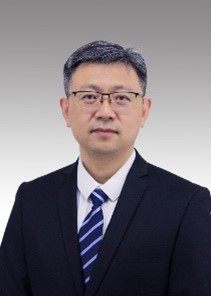
Assoc. Prof. Xiaoming Dong, Shandong University, China
Dr. Xiaoming Dong received the B.S., M.S., and Ph.D. degrees in Electrical Engineering from Shandong University, China, in 2003, 2009, and 2013, respectively. From 2013 to 2015, he held a postdoctoral position in the Department of Electrical Engineering at Tsinghua University. He joined the School of Electrical Engineering at Shandong University in 2015 and has been an Associate Professor since then. From 2018 to 2019, he was a visiting scholar at Nanyang Technological University, Singapore.
His research interests include power grid transfer capability analysis and optimization, as well as secure, economic, and low-carbon optimal scheduling for power systems with high uncertainties. He has published more than 20 SCI-indexed papers as the first or corresponding author and holds over 10 authorized invention patents. As the principal investigator, he has undertaken several national and provincial research projects, including those supported by the National Natural Science Foundation of China and the Shandong Provincial Natural Science Foundation. He has also led over 10 industry collaborative projects with major power utilities. His research achievements have been recognized with multiple awards, including the China Electric Power Innovation Award and the Shandong Provincial Science and Technology Award.